


The University of Minnesota Marching Band
Since it’s establishment in 1892 as the University Cadet Band, consisting of only 29 members, the now 320~ member Pride of Minnesota has been hailed as one of the best collegiate marching bands nationwide, make a significant and vital contribution to both the University and great state of Minnesota. The band boasts a rich history of band directors, including Dr. Frank Bencriscutto and current band director, Dr. Timothy Diem. As always, the Marching Band performs at all University of Minnesota Golden Gopher football home games, at TCF Bank Stadium in Minneapolis. Additionally, the band holds annual Indoor Concerts at Northrop Memorial Auditorium, performs in the U of M Homecoming Parade down University Avenue, and at an occasional Golden Gopher away game.

The First Regiment of Minnesota Band
In 1918, the University Cadet Band was merged with the local Army band to form the First Regiment of Minnesota Band. A Second Regiment of Minnesota Band also existed briefly in 1918, until the Regiment was decommissioned later that year. Following the War effort, all students in either band were invited back to a separate University Band, which had dropped the word "Cadet" from its title.
Women in the Band
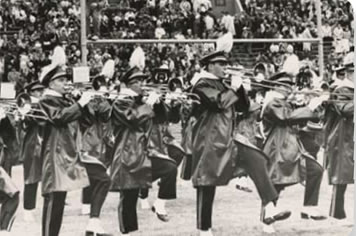
When it was originally formed, the band consisted of exclusively males. Women were first allowed to perform with the band in 1943-1945, when they were allowed to "fill in" for male members of the band that were serving in World War II. In 1950, a "Women's division" of the band was created, which lasted for several years. Women were finally allowed to be full members of the band in 1972. In 2006, Molly Watters was selected as the first female Drum Major in the history of the band.Before the 1960s, the history of the University of Minnesota Marching Band was not always well recorded, resulting in an ongoing rediscovery effort. If you have information you would like to share with the band regarding its history or past membership, we invite you to contact us at ummbstudentmedia@gmail.com.
Hail! Minnesota




Sitting next to their campfire, as the two companions contemplated the general state of affairs in the word, Arnold had an inspiration. "We ought to have a class song." Picking out a melody that suited the woodland setting, Rickard dreamily responded, "Yes, it would be a good thing." The subject did not come up again until well into the following school year, when Arnold found himself in charge of the 1904 senior class play. Discussions among the play committee members revealed a unanimous desire that a class song should be written, its presentation to coincide with staging of the annual dramatic production. As a result, Rickard was asked to compose the music, and a young woman student was to add words. Truman produced three melodies, of which one was particularly pleasing to the committee. However, when after a time the young lady failed to provide the requested lyrics, it appeared that the idea of a class song might never reach fruition. Rickard's mother urged him to write some verses himself rather than let the song die. He enlisted the assistance of a close friend of President Northrop, Rev. Dr. Ernest Shurtleff of the First Congregational Church. The reverend supplied valuable suggestions about the sentiment and lofty expressions of love for the University that should be contained in a song representing the senior class. Rickard's composition had it first public performance on Class Day, May 28, 1904. The class play, entitled The Apple of Discord, was performed that evening in the old Metropolitan Theatre on Marquette Avenue. When the moment for the song was reached, the first verse was sung:
Minnesota, hail to thee
Hail to thee our college dear
Thy light shall ever be
A beacon bright and clear
Thy sons and daughters true
Will proclaim thee near and far
They will guard thy fame
And adore thy name
Thou shalt be their Northern Star.
Then, turning toward the box of President Northrop, the chorus sang the verse that had been written in tribute to him:
Hail to thee our Prexy, Sire
Thou hast made us all thine own
And our hearts one boon aspire
That our love may be thy throne
Throughout our future years
Naught can e'er thy memory mar
We will guard thy fame
And adore thy name
Thou shalt be our Northern Star.
The song was again performed at commencement, and Rickard reluctantly agreed to come to the piano to play the accompaniment, after which he received many words of congratulations. The following fall, the editors of the various University periodicals were unanimous that this was a song that perhaps might fulfill the long-felt need for a Minnesota hymn. Arthur Upson, literary editor of the Minnesota Daily and recognized as a poet of unusual merit, composed two additional verses for consideration by the student body. Upson's first verse was readily adopted. Shortly thereafter, President Northrup came forward with a request. "Personally, I would enjoy the song more if the stanza concerning the President were omitted. I think it would be better taste to have the song concern only the University." He also requested a few minor revisions of Upson's third verse, to eliminate confusion between Minnesota, the state, and Minnesota, the university. Upson's verse as modified to comply with Prexy's wish:
Like the stream that bends to sea
Like the pine that seeks the blue
Minnesota, still for thee
Thy sons are strong and true
From their woods and waters fair
From their prairies waving far
At thy call they throng
With their shout and song
Hailing thee, their Northern Star!
Through the winter, spring and fall of 1905 the song gained in popularity. Being sung in chapel each Friday, Rickard's first verse gradually became recognized as the school hymn, with Upson's lyrics serving as a second verse. The words remained unchanged thereafter, and the song became generally used at all student gatherings, even at sporting events. Hail! Minnesota was made the official state song by resolution of the 1945 legislature, the only change being that the second line reads, "Hail to thee, our State so dear!" instead of "college dear." Truman Rickard had an artistic temperament, and while he was interest in history, historical sites and the beauties of nature, music was his main interest. Of course, he will always be remembered for Hail! Minnesota, but he had other musical compositions to his credit, including To A Friend, The Faith of the Mountains, In A Garden, Heaven's Windowsill and The Mystery of You. His sense of aesthetics was too strong to allow him to commercialize on any of these works. In 1925, he entered a song in the University contest and won $50 for his composition of the tune and lyrics later to be known as Minnesota Fight, which endures to the present day. Arthur Upson came to the University in 1894, entering as a member of the class of 1898. Ill health continuously interrupted his studies, and he never fulfilled the requirements for a degree. However, his acclaim as a gifted poet was widespread, and he was awarded his degree in 1905 after publication of one of his distinguished volumes of poetry. He became a member of the English Department faculty in 1906. Tragically, he drowned while writing a play in verse during a vacation in northern Minnesota in 1908. Literary men of his time called Upson "an aristocrat of verse" and "a writer's writer," hailing the robust quality of his plays as well as the delicacy of his sonnets. In 1924, a room in the University library (now Walter Library) was named in his honor. In the Arthur Upson Reading Room, students may read for pleasure but they may not study. James Gray wrote, "This place honors the memory of one who would have said that in a university where there are many shrines to scholarship, there should be one shrine reserved for the innocent enjoyment of art." In 1964, it became special collections reading room. Taken from the U of M Marching Band Centennial Book, Minnesota Hats Off to Thee, ©1992 by The University of Minnesota Band Alumni Society, which remains available for purchase from the University of Minnesota Bookstores.
The Minnesota Rouser

"Minnesota...is set to comparatively slow music, and the students complain that they have to use a dirge when they want to sing something peculiar to their own alma mater... At football games a snappy, lively air and enthusiastic words are wanted... Minnesota should be retained for formal or solemn occasions..."
Rooter King Russell "Bunny" Rathbun noted, "Minnesota is beautiful, but too mournful to warm the feet in the bleachers."
A University Alumnus, Dean B. Gregg ('08), finally was motivated to help resolve this dilemma during the Gophers-Iowa game on October 2, 1909. According to the Minnesota Daily,
"While at the Iowa game, (Gregg) discovered the true cause of half-hearted enthusiasm in the lack of a rousing song. Realizing the need on the spur of the moment he offered five dollars for a song that would fit..."
The Daily immediately took up the calling and doubled the prize on October 7. By October 9 the Minneapolis Tribune had added fifty dollars to the pot and taken over sponsorship of the project. A few days later, Minneapolis businessman Horace Lowry contributed forty dollars, bringing the total prize to an even $100.
Although the initial Daily promotion suggested that the contest be open only to current U of M students and alumni, The Tribune quickly revised this policy to allow entries from the general public, publicizing the contest far and wide. A group of five judges was chosen, including Governor Alexander O. Oberhart, President Cyrus Northrop, Music Professor Carlyle Scott, and two students, J.A. Sende (Chief Musician of the University Band), and Arthur Allen, President of the Glee Club.
Compositions poured in, from professionals and amateurs alike, from as far away as Los Angeles and New York. By the November 1 deadline, 93 songs had been entered, and the judges had their work cut out. They met on Saturday, November 6 at President Northrop's home. According to the Tribune:
"The judges found it easy enough to determine what song presented the most suitable array of words, but it was a little more difficult to pass on the harmony and the 'magic of sweet sounds.'"
Then it was that Governor Eberhart showed that he was in addition to a statesman and a humorist, a singer of more than ordinary ability. He weekly sang the words of many of the songs to the accompaniment of Professor Carlyle Scott on the piano. President Northrop, too, showed that he was something of a vocalist, and frequently "prexy" could be heard gently humming one of the melodies which the judges were considering.
By evening, they had chose a winner. He was Floyd M. Hutsell, the 27-year-old choir director of the First Methodist Episcopal Church in Minneapolis. The judges proclaimed that his entry, entitled Minnesota, Hats Off To Thee, was "light and catchy... its lilt and vigor will set the hearts of the Gophers and their friends all aglow with athletic fervor, and be a valuable aid to them in many a hard-fought battle." The words and music were published in the November 14 Tribune under the title, the U. of M. Rouser, carrying Hutsell's inscripting, "Dedicated to B.A. Rose, Band Master, U. of M." A week later, a special supplement in the Sunday Tribune presented the song under a colorful souvenir cover.
Prior to the tune's public debut at the Minnesota-Michigan game on November 20, reaction to the Rouser was decidedly mixed. Said one student, "It hasn't enough spirit. It sounds like a kindergarten song." Another opined that "The chorus is great if it weren't for the words." Said a third, "I think it will be a lot better when the Band plays it." President Northrop did not mince words, and was quoted as saying, "It has no distinction of language. It is commonplace and not worthy of Minnesota. We shouldn't have given the prize until a really good song was submitted."
With this somewhat shaky beginning, the tune gradually gained favor as it became used regularly, but the composer's first (and apparently only) verse was eventually dropped from use in favor of the refrain. Hutsell's lyrics were as follows:
Honor to our college, Minnesota U!
Loyal to thy standards, we'll ever be untrue
Underneath thy pennant pulses beat with pride, and
Victory e'er shall be our aim o'er the nation wide!
(Yell)
Refrain
Minnesota, hats off to thee
To thy colors true we shall ever be
Firm and strong, united are we
So rah, rah, rah, for Ski-U-Mah
Rah, rah, rah, rah
Rah for the U of M.
Floyd Hutsell went on to relative fame in the music business. Choosing the glamorous stage name "Robert LaMar," he went to New York City and traveled the vaudeville circuits, on one occasion touring with Eddie Cantor. He later became an expert in Gilbert and Sullivan operettas, producing several in new York and appearing on Broadway with great success in the role of Koko in Mikado. After a number of years teaching opera at various American conservatories, LaMar eventally settled in Houston, Texas, where he and his wife established a distinguished program of music in one of the local churches.
The composer of the Rouser spent his retirement years in Madill, Oklahoma as a local church choir director and music teacher. Upon his death in 1961 at the age of 79, Mrs. LaMar in a loving tribute to her husband's musical career erected a monument at his grave. The name LaMar is engraved on its granite shaft, but the name of Floyd M. Hutsell and the music to the refrain of the Minnesota Rouser are emblazoned on one side of the marker to perpetuate his most lasting musical accomplishment.
The sound of the University Band striking up the Minnesota Rouser has inspired generations of Minnesotans to leap to their feet and join in rhythmic applause, vocalizing those spirited words, "Minnesota, Hats Off to Thee!..." Taken from the U of M Marching Band Centennial Book, Minnesota Hats Off to Thee, ©1992 by The University of Minnesota Band Alumni Society, which remains available for purchase from the University of Minnesota Bookstores.
Minnesota March

Beginning with The Review in 1873 and ending with Century of Progress in 1931, Sousa published more than 150 marches (though it is interesting to note that his autobiography, published four years before his death, lists only 105). Only four have appear to have been written expressly for universities: Marquette (1924), Minnesota (1927), Nebraska (1928), and Illinois (1929). To these might be added Who's Who in Navy Blue, a march song dedicated to the United States Naval Academy Class of 1921. Pride of the Wolverines, used as a march by the University of Michigan, was adapted from a vocal duet composed in honor of the City of Detroit. (Interestingly, Sousa wrote a waltz called Coeds of Michigan in 1925.)
Thus, while Sousa may have exaggerated a bit when he said that Minnesota was the only composition he had ever written in response to a request and that he "had always refused to do such a thing," it is a fact that very few universities were so honored.
The need for a more adequate marching song had long been felt at Minnesota and I was occasionally expressed. Yet nothing was really done about it until University band director Michael Jalma conceived the idea that John Philip Sousa might be persuaded to provide the music. He apparently confided this idea to football coach Clarence Spears, for the Minneapolis Tribune credited Spears for informally making such a request to the famous bandleader. In October 1926, Sousa played an engagement at the old Lyceum Theatre in Minneapolis, and a committee of University officials was formed to wait upon him. It consisted of, in addition to Jalma, E.B. Pierce, Secretary of the General Alumni Association; Carlyle Scott, Professor of Music; and Otto S. Zellner, Associate Professor of Surveying and a member of the University Band's faculty advisory committee.
The committee was cordially received by Sousa on October 16 in his suite at the Radisson Hotel, and he readily agreed to the request, though he said he would have to "wait for inspiration" before he could promise a delivery date. He said that the beautiful Indian legendry which formed the background of Minnesota greatly appealed to him and that he was impressed by the very names with which the state abounded, such as Minnehaha, Chippewa, and Minnesota. He hoped to reflect some of this heritage in his composition.
In March 1927, Sousa wrote to E.B. Pierce that the march was almost finished. He expressed regret that it did not contain as much of the Indian or "Ski-U-Mah" theme as he had wished, but that his friends who had heard it "were fond of it" and that it had a rollicking character that should go well in a college composition. He said that about fifty students and alumni had written him with suggestions for a title and that he had chosen Minnesota as the most suitable name.
Upon receipt of this news, the University Band got busy planning for the march's introduction to the student body. A special spring convocation was envisioned, but the premier performance was not to be, for by the time Sousa completed the band orchestration, he had made his own plans for the composition's first public performance.
In September 1927, Sousa and his band returned to Minnesota to fulfill an engagement at the State Fair, at which they were the featured attraction--in fact, the expression "Sousa's Fair" was frequently heard. The band's manager, on an advance visit, had told fair officials that Sousa wished to introduce his new march at the fair and that he planned at the same time to present the original manuscript, with his autograph, to the University.
When University President Dr. Lotus D. Coffman was requested (apparently at the last moment) to take part in the ceremonies, he objected on the grounds that the march had been expressly written for the University and that the only proper place for its introduction was the campus, with the student body present. With E.B. Pierce out of town and not available to advise him as to any previous discussions of agreements on this matter, Coffman, said he believed that Sousa planned to "commercialize" the march, and he announced that he could not take part.
State Fair officials, asserting that the fair was "an innocent third party," said that their only interest was to carry out the personal wishes of Sousa, whose motives they defended. The upshot was that on Saturday, September 3, before an appreciative crowd of 12,000 that packed the grandstand, the manuscript was accepted "on behalf of the State" by the President of the Minnesota State Agricultural Society, William F. Sanger, The march, which Sousa said he considered "the best piece I have every written," then received its first public performance. According to Harry J. Frost's official history of the State Fair (1964), Sousa was "taken aback by the rebuff" but "the good-natured bandmaster was not offended. He called it a mistake and presented the manuscript to the president of the Fair with the remark, 'It is almost providential that the march is Minnesota and not University of Minnesota.'"
It is clear that the incident did not affect Sousa's original intention, however: The manuscript was inscribed "To the Faculty and Students of the University of Minnesota--John Philip Sousa." Nor did it influence his appreciation of Minnesota musicianship, for it was not much later that two members of the University Band left to join the Sousa organization: Edward Bearman on bass and Ralph Wige on baritone.
Professor James Davies, music critic of the Minneapolis Tribune, attended the fair, particularly to hear the new march. Calling it "vital" and "fine," he found the composition to contain "the splendid old rhythmic power" and also "something that reflected more than a passing glimpse of academic life." Perhaps unconsciously echoing Sousa, who regarded the piece as suitable for a vocal refrain, he concluded his review with this plea: "Where is the verse make whom it will inspire to doughty poetic deeds?"
The Minnesota March had its campus premiere on October 26, 1927 at a song fest in the Armory. A crowd of 2500 students and faculty in attendance greet the march with such applause the 100-piece University Band was obliged to repeat it. According to the Minnesota Daily,
"Minnesota fighting spirit, characterized in music by a swinging rhythm and rousing melody of the piece, was greeted with greater applause than any number on the program."
When Davies asked that words be put to the music, he did not know that Jalma had anticipated him and that the now-familiar words beginning, "March on, march on to victory" were to be sung at the football games that fall. While Jalma was responsible for many innovations and pioneered the trend that has put the leading university bands on a par with professional symphonic organizations, his most lasting monument may well be the phrase, "Words by Michael Jalma," as the refrain is sung by uncounted generations yet to come. Taken from the U of M Marching Band Centennial Book, Minnesota Hats Off to Thee, ©1992 by The University of Minnesota Band Alumni Society, which remains available for purchase from the University of Minnesota Bookstores.
Our Minnesota and Minnesota Fight
In the spring of 1925 it was clear to the students, alumni, and faculty that Minnesota was suffering from a lack of spirited fight songs. While the Rouser was well-liked, there was no musical variety to keep the crowd on its feet. To remedy this "deplorable situation," a committee headed by Music Department Chair Carlyle Scott was appointed to solicit new songs from Minnesota's talented students.The Minnesota Union quickly threw its hat in the ring, offering a fifty-dollar prize for the best college song text and another fifty dollars for the best music. Songs were to be submitted to the judging committee consisting of Scott, Choral Music Professor Donald Ferguson, and Otto Zellbne of the College of Engineering. Killeen made it clear that the judges wanted peppy, spirited songs, "none of this 'stately college halls' or 'purple haze' stuff.
After a month of pleas in the Daily for song entries, the creative pens started to flow. More than forty entries were submitted, among them a composition by music student Marion Bassett. A native of Fort Dodge, Iowa, Miss Bassett had chosen the University of Minnesota for her education based on the excellent reputation of its music department.
She became a student of string professor (and onetime U of M marching band director) Karl Scheurer, who was the first violinist with the Minneapolis Symphony. Although Marion was in pursuit of a music degree, she opted for a major in English and a minor in music, "so that I would earn a B.A. rather than a B.M.!"
As luck would have it, about the time the contest was getting underway, Marion was taking a class in music from Professor Scott, and each of his students was assigned the task of composing a "pep song" to be entered. Marion went to work, and as she explained in a 1990 interview, "It was just a tune I had in my head... There was no real inspiration for it."
Turning to her father, George S. Bassett, for assistance with the lyrics, Marion turned in a composition that was chosen as one of five top tunes to be considered for the prize. One of the other four candidates with a shot at fame and small fortune was Truman Richard, who had penned the music and lyrics to Hail! Minnesota some twenty-one years earlier. The Minnesota Daily records that the judging committee was so impressed with these two entries, finding "something of merit in both songs," that the award was split between the two: Bassett's Our Minnesota and Rickard's Minnesota! Let's Go! (later to become known as Minnesota Fight).
The new songs were arranged for band by Michael Jalma in time for the first pepfest of the 1925 football season. Words for both pieces were published in the Daily, and seven hundred Rooter Club members sang as the band played for their campus debut. The Daily later noted that "Minnesota enthusiasm now has an adequate means of outlet with two new fight songs... serving as safety valves to permit the explosion of Minnesota pep." Both tunes were published a year later by the General Alumni Association in a folio of Minnesota songs.
Both Our Minnesota and Minnesota Fight have stood the test of time and continue to be performed regularly by the Minnesota Band. Taken from the U of M Marching Band Centennial Book, Minnesota Hats Off to Thee, ©1992 by The University of Minnesota Band Alumni Society, which remains available for purchase from the University of Minnesota Bookstores.
Minnesota and On! Wisconsin
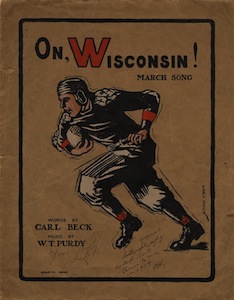
Ironically, according to Wisconsin’s own school archives, the fight song “On! Wisconsin!” appears to have been originally meant for the University of Minnesota. In 1909, Composer of the tune William T. Purdy heard from his home in Chicago that Minnesota’s University was offering a $100 cash prize to whomever could write the best song to fire up the fans. Excited at the prospect, Purdy quickly put together a now well-recognized tune. When Madison graduate and friend Carl Beck heard the song and added some lyrics, he convinced Purdy to send it to Wisconsin, his Alma Mater, instead. The lyrics "Minnesota, Minnesota" were re-written as "On Wisconsin, On Wisconsin," and the rest is history.
Shy of Mr. Purdy’s composition, the Gophers sorted through the other 93 entries and selected the Minnesota Rouser instead, certainly not at a loss. But next time you hear a Wisconsin fan proudly cheering along to On! Wisconsin!, smile and remember just how close that very same tune was to being sent a little further North.
Directors

Dr. Timothy Diem
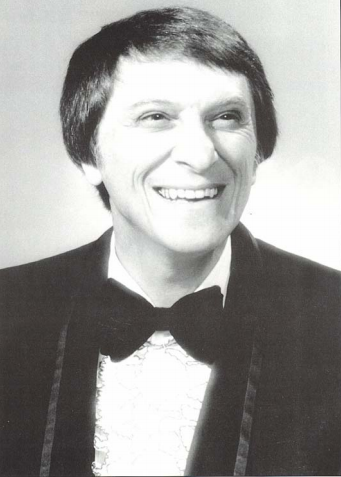
Timothy Diem is the Director of Marching Band and Assistant Director of Bands at the University of Minnesota. Prior to his appointment at the University of Minnesota, Diem served as a Graduate Teaching Assistant at the University of Northern Colorado and also spent three years as a music instructor in the West Central Area School District in the greater Barrett, Minnesota area.Diem received Bachelor of Arts degrees from the University of Minnesota-Morris in Instrumental Music Education and Piano Performance, and holds master's degrees in Wind Conducting and Collaborative Piano Performance from the University of Northern Colorado. He completed his doctorate in Wind Conducting with a secondary concentration in Music Education at UNC. His dissertation, A Study of the Life of Henry Joslyn, Including a Critical Edition of “Prairie: Poem for Viola and Wind Orchestra (1926)", was completed in 2007.
Diem has appeared as a guest conductor and clinician throughout the United States and in Singapore. He is a strong advocate for music education and has membership in College Band Director’s National Association, Minnesota Band Director's Association, Music Educators National Conference, and the Minnesota Music Educators Association.
To read more about Dr. Timothy Diem, click here.
Drum Majors
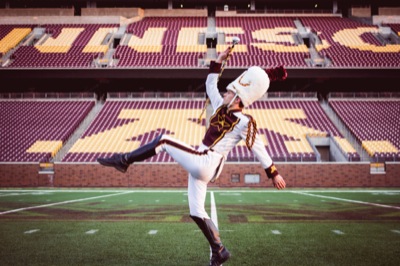
Robert Rudin III
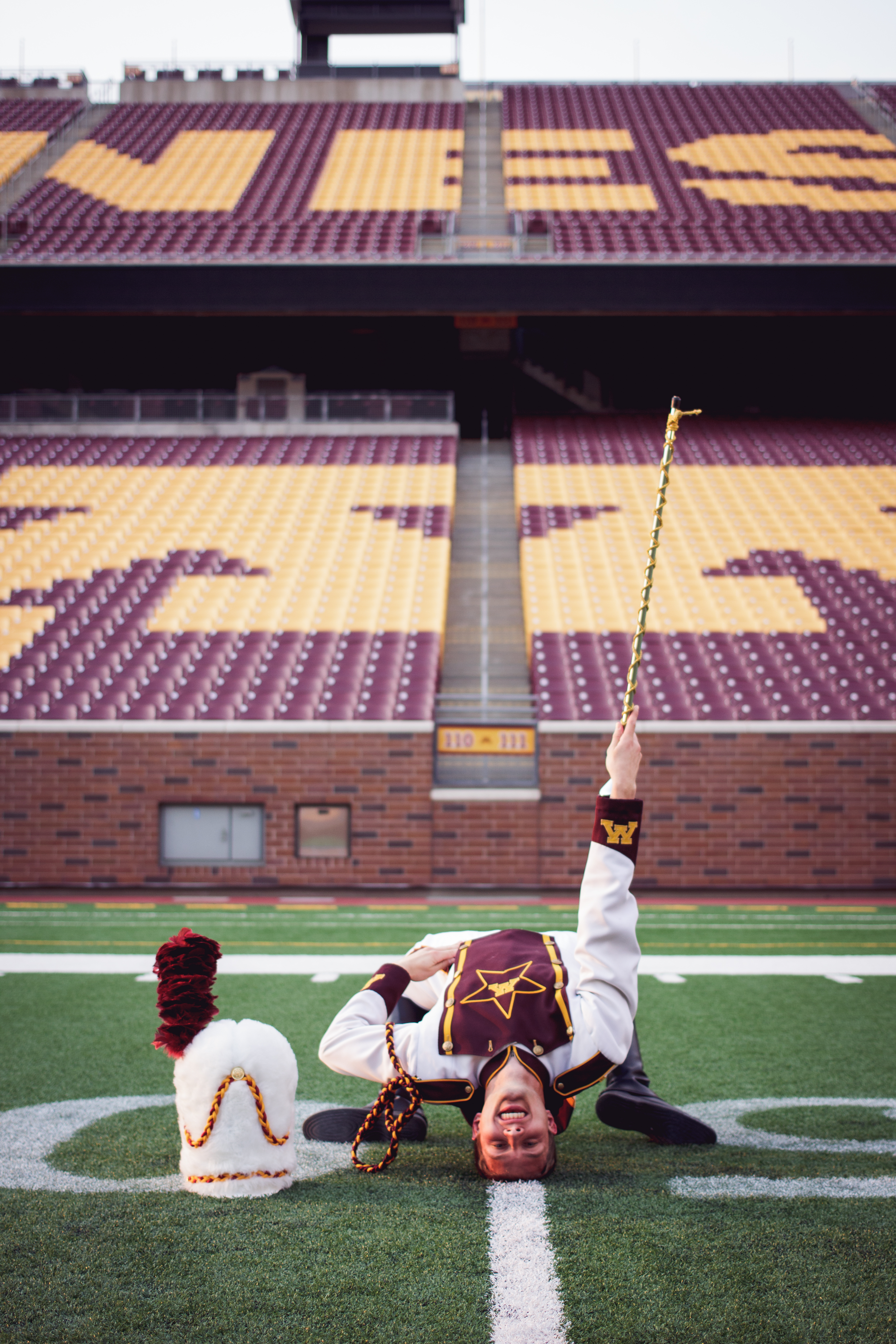
Robert is majoring in Civil Engineering with a minor in Chemistry within the College of Science and Engineering. In the summer of 2015, Robert will be performing research at the University of Maryland on various topics in transportation. He hopes to one day work within the field of transportation on mass transit.
After being admitted to the University, Robert immediately joined the University of Minnesota Marching Band and Gopher and Maroon Pep Bands as a member of the trombone section. He has also participated in concert band and jazz ensemble and intends to continue playing music during his time at the University of Minnesota.
Outside of classes and Marching Band, Robert stays active through running and participates with the University of Minnesota Quidditch Club as a golden snitch. He is an avid rock climber with the University of Minnesota Climbing Team and spends most of his free time outside of class hanging out with friends at the rock wall. He also enjoys playing catch or throwing a Frisbee outside with friends on the warmer days.
Block Captains
Maroon and Gold

Ski U Mah
"Sky-You-Ma"

John W. Adams and his roommate, "Win" Sargeant, determined to devise a yell with a characteristic Minnesota flavor. Naturally, "Rah, Rah, Rah: was an obvious necessity in an effective college yell, and as something with a distinctive Minnesota flavor, he adopted the word "Minnesota," dropping one syllable and pronouncing it "Minn-so-ta". Two three-syllable lines needed a third, and he cudgeled his brains for a three-syllable Dakota word that would express exultation.
The memory of a race between four Dakota boys in two canoes, which he had seen the year before at Lake City, Minnesota came to mind, and he recalled how, as soon as one canoe pulled across the finish line ahead, one Dakota put up his hand and yelled, "Ski-oo". Mr. Adams, who was somewhat familiar with Dakota life in his younger days, remembered that this cry was almost invariably used by young Dakota when winning an athletic contest of any kind and that the Dakota children generally used this exclamation to express exaltation or pleasure.
Another syllable was necessary to make it harmonize, and Mr. Adams added "Mah," to rhyme with "Rah" and "ta". As the yell was originally planned, the emphasis was placed on the second syllable of each line as follows:
Rah, RAH, Rah
Ski OO Mah
Minn SO ta
The yell was printed for the first time in the Ariel of 1885 in the following form:
Rah, Rah, Rah
Ski U Mah
Minn-so-ta
About six or seven years later, the original yell was pronounced deficient in noise-making qualities, and a committee was appointed to revise the yell. The characteristic feature of the old yell, the "Ski-U-Mah" was retained, and the emphasis on the remainder was changed and a few new syllable added as follows:
Rah, Rah, Rah
Ski-U-Mah
Hoo-rah, Hoo-rah
Varsity, Varsity
Minn-so-ta
With the emergence of Go Gopher Victory in 1925, the phrase was modified, eliminating the words "Varsity, Varsity" and adding the fourth syllable to Minnesota. The words Rah, Rah, Rah and Ski-U-Mah have found their way into a number of songs and yells.
Marching Style

Halftime shows are performed using a corps-style low step marching that allows for more musicality and forms that do not necessarily conform to a grid.
"Run-Cadence" is the band's method of getting on and off the field for a show. It is essentially a double-time chair step, although the quickness of it necessitates that at times neither foot is in contact with the ground, as with the regular chair step.
Pregame

The pregame show in its current configuration consists of the following:
Drumline and Tubas enter the field to the "Er Du Klar?" cadence
Run-Cadence on to the field in entry lines.
Expand the lines into a block formation to "Fanfare '87".
March down the field to John Philip Sousa's "Minnesota March".
Spell out "GOPHERS" while playing "Go Gopher Victory".
Return to block during "Big Ten Drip" cadence.
Play the opposing team's school song. This is removed if the opposing school sends a band with the team. (Big Ten Opponents only)
Return to block during "Big Ten Drip" cadence.
Play "Battle Hymn of the Republic" while performing the "Swinging Gates" formation.
"Post Nasal Drip" followed by "Cascade" into the compressed "Block M" formation.
Expand into the "Block M" formation while playing "Fanfare '78-Pageant"
Play the "Rouser."
Rotate the "Block M" formation toward the student section to "Funk G".
March the "Block M" downfield while playing "Our Minnesota"
"Post Nasal Drip" followed by "Goldy's Groove" Cadence into the "Gauntlet" formation.
Play a modified version of the theme from "Superman" while Goldy Gopher runs onto the field.
Play the "Rouser" as the football team runs onto the field.
Play the "Star Spangled Banner" from this block. The C.A.F. (Ceremonial American Flag) is unrolled during the National Anthem.
Run-Cadence off of the field.
Rivalry Trophies
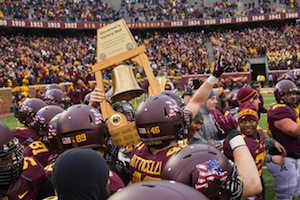
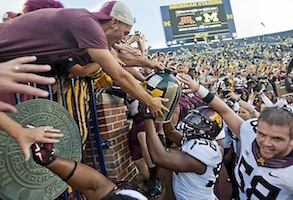

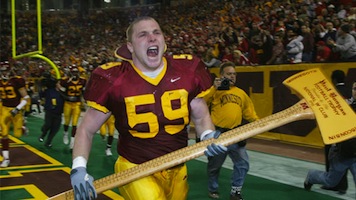
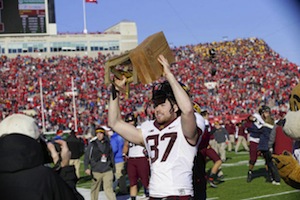
In addition to the four trophies mentioned above, in 2014, Goldy Gopher created “The $5 Bits of Broken Chair” Trophy for the Minnesota-Nebraska rivalry upon popular fan request. The rivalry was the only B1G heartland rivalry to previously not play for a trophy. Punter #37, Peter Mortell can be seen in the last picture above victoriously hoisting the trophy after a huge away game win at Lincoln, Nebraska in 2014. Although not yet officially recognized by the NCAA, there is much support for its approval from both schools.
Uniforms
Throughout the years, the University of Minnesota Marching Band has had several wardrobe changes. To celebrate our upcoming 25th year in our current uniforms, we decided to show off each of these outfits in our most recent indoor concert.
The University of Minnesota Marching Band faces the necessity of replacing its tired, worn, 24-year old uniforms. The goal is to have new uniforms in use by Fall 2016. Made in the USA, the new uniforms will be rugged, weather-resistant, flexible, and will have reversible overlays. The band needs 400 uniforms at a cost of $1,000 per uniform. Every dollar raised beyond the $400,000 goal will go towards the Equipment Fund, which supports the maintenance and purchase of replacement instruments. All gifts are tax-deductible.
Please click here if you would like to contribute to our cause.
Twirlers
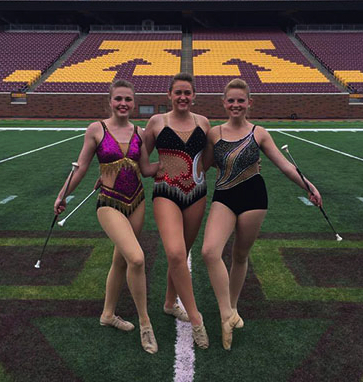
Color Guard

Moving forward into the 1970s, the Flagline separated itself from the Big Ten Flags, flaunting new maroon and gold flags featuring a Minnesota Block M. The group began to choreograph simple routines to the school songs, spinning during both pregame and halftime. As time progressed, the line began using more contemporary spinning techniques, incorporating body movement and adding rifles to the halftime shows.
In 2008, the University of Minnesota Flagline officially changed its name to the University of Minnesota Color Guard, adding yet more colorful flags and body movement to increase visual effect. During pregame, the Guard uses "M Flags" which incorporate a styled "M" into the design. The Color Guard marches and spins through every aspect of pregame, including their glorious march through the Swinging Gates. During Halftime, the Color Guard uses various 6 foot poles and rifles which have different silk designs. The ever well choreographed routines and high spirit of the Minnesota Color Guard continuously adds to the great name of the Pride of Minnesota.
Goldy Gopher and the Band
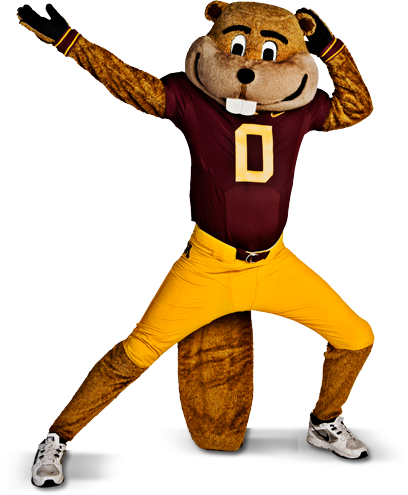
Minnesota's athletic teams became widely known as the "Gophers" but it was not until 1934 that the immortal Halsey Hall, great Minnesota sportswriter and broadcaster, dubbed Bernie Bierman's all-gold uniformed team "The Golden Gophers". (Bierman chose the gold color because the football blended in with the uniforms!).
The embodiment of the Gopher mascot came to life in 1952 when assistant bandmaster Jerome Glass bought a fuzzy wool suit and asked technology junior Jim Anderson climb into it.

In 1955 Milton Bix, a live wire from the percussion section, appeared sporting a new $110 gopher suit that was a little TOO BIG and again, much too hot. Milt also had vision problems where he had no useful eyes and had to peek out of the mouth. Unfortunately his glasses would fog up on warm days, nearly blinding him. He began carrying a cane, which appeared to be a joke—however he really needed it. Milt also had a lot of trouble getting in the way of the band during field maneuvers and had to memorize formations in order to save himself from becoming a traffic fatality.

William Johnson was the Gopher in 1956-57. During his first appearance he was besieged by a group of young pranksters who tore his tail off. Nevertheless, he asserted, "I've never had so much fun in my life!" He also claimed that being a Gopher, "doesn't take talent, just guts." Along with DuWayne Kloos who served as Gopher in 1954, these exuberant fellows launched a tradition which is still going strong.
"Goldy" Gopher (the first name seems to have appeared sometime in the '60's) became a fixture with the Marching Band and Pep Band, as each year a band member was chosen to don the suit. Wherever these two bands performed, Goldy was there to glad-hand with the crowd, hug the little kids, torment the cheerleaders and generally add a friendly Minnesota flavor to the event.
Wilbur "Gabby" Meiners, who was Gopher in 1960-61, recalls the football away trip in 1960 with a brand new Gopher uniform. Gabby was known for climbing the goal post, and some cop at the game kept shaking the post so he would fall off. When he did, someone snatched his tail and he never did get it back. Gabby notes he was "the lucky guy who got to be Gopher at the two Rose Bowls". During his years in the Band the Gopher was actually written into the football shows with a specific place to be.
Bill Travis, Gopher in 1965-68, recalls emulating Gabby's style and likewise climbing the goal post, but with one added twist. "The first time I was Gopher, after practicing in shorts all summer, my first game was High School Band Day. Well, I was on the crossbar, and it turned out the Gopher suit was really slippery and I started to slide off. I fell off right on my head, and 2500 high school kids cheered and yelled 'Do it again, do it again!'”
Keith Randa, who as Goldy got to film a football commercial with Bob Hope in the fall of 1980, was Gopher for hockey and basketball from 1980-82. He especially recalled how hot it got in the suit, and what a pleasure it was to find a breeze, turning his head so the eyeholes were aligned just right to let in some cool air. On the coldest days in memorial Stadium, Goldy Gopher was probably the only fan in the stadium who stayed warm!
Dave Trembley remembers that being Goldy was perhaps the greatest therapy in the world. No matter how stressful the week had been, for a period of three or four hours on Saturday afternoon he could put on the suit and "step into a fantasy world, with a license to do virtually anything."
Each person who through the years was allowed the joy of being the Gopher developed an individual personality, a unique way of relating to the crowd. And the mystique of Goldy Gopher became a tradition that absolutely prohibited removal of the head while in public, maintaining an illusion for the younger children that maybe, just maybe, the Gopher is a real live huggable animal.
The gopher suit had changed though the years, sometimes by chance, sometimes by design. Until the early 1970's the had was narrow and pointy-nosed, reminiscent of the real animal. Then in 1972, Goldy suddenly grew chubby cheeks and a wider, forward-looking face, almost cherubic in appearance. in fact, the gopher of the '70's and early '80's was comparable in appearance to a teddy bear, a favorite of children and grandmothers. For a brief period in 1985, a fierce-looking 'mega-rodent' appeared, with barrel chest, clown feet and sinister eyes. This look didn't last long, and Goldy soon again became a lovable, friendly character.


Clarinetist Kathy Hollenhorst told me she had always wondered what it would be like to be Gopher and asked if she could take my place. I agreed and Saturday came and went. I never gave it much thought until next week's game. On that day I cavorted and danced, waved an wiggled, nothing out of the ordinary, my usual antics. However, as I approached the varsity football bench, the players looked at me with suspicion (and perhaps, much to my amazement, with a little fear), got up, and walked away.
Their puzzling behavior after several similar awkward encounters led me to finally life my head and ask 'Hey, what's going on here? You're acting like I've got rabies or something.' One player, from a safe distance responded, 'Man, what did you think you were doing last week, going right down the bench and pinching each one of us?' "Pinching? What are you talking about?' Then it hit me. 'Oh, I know. That wasn't me. A girl I know substituted for me last week.' The player shot back a look of incredulity and simply said, 'Yeah, sure.'"
From 1952 until 1990, the Gopher appearing at U of M sports events was a member of the Marching Band, and a symbiosis developed through the years that on more than one occasion kept Goldy out of trouble. With a propensity for attracting tail-pulling kids, Goldy has long relied on the band to save him from their clutches. And when the opposing team's cheerleaders or band members managed to 'kidnap' the unfortunate rodent (a Big Ten tradition, it seems), band members would always come to the rescue.


Athletic Pep Bands

Generally, most students spend their first year in Gopher Band. After completing a full year in Gopher, students are given the opportunity to join either our Men’s Hockey (Maroon) Band, our Men’s Basketball (Gold) Band, or stay in Gopher band. For details on what events each band typically covers, please see each band’s respective page. As always, feel free to contact us at pepband@umn.edu to discuss schedule conflicts or any other concerns you may have.
Gopher Band
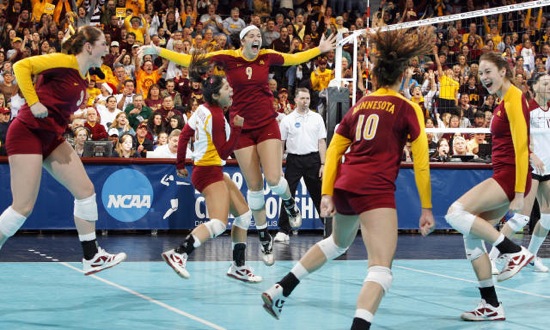
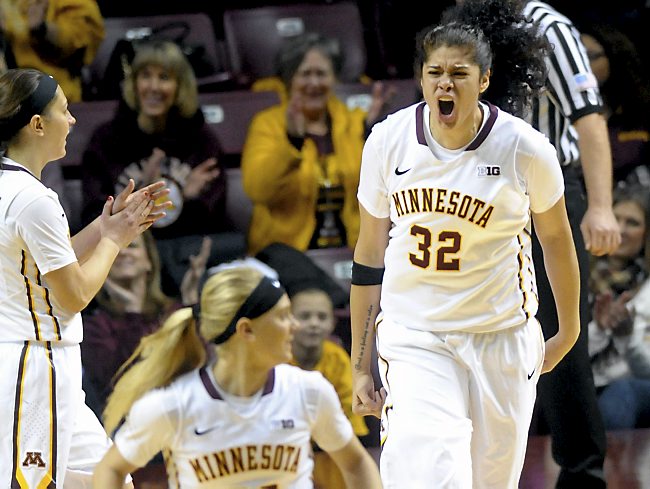
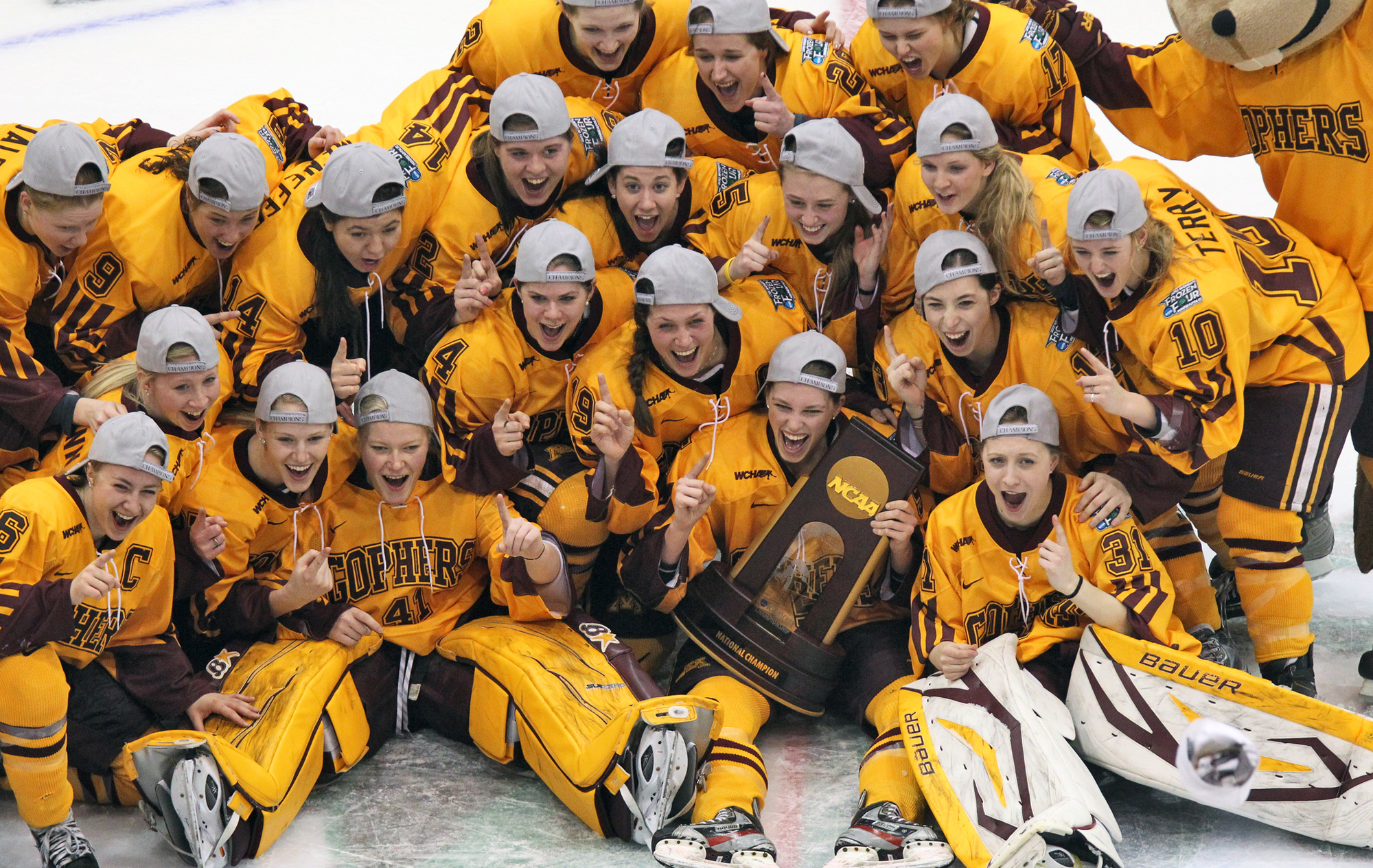
Director: Roy Piennar - pepband@umn.edu
Maroon Band
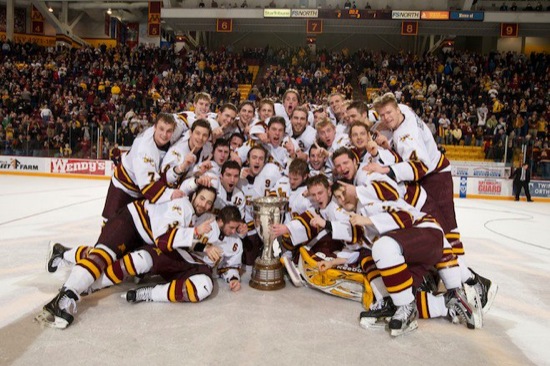
Director: Skeeter Burroughs - skeeter@umn.edu
Gold Band

Director: Skeeter Burroughs - skeeter@umn.edu
Be Part of Something Great
The University of Minnesota Marching Band is much more than just another collegiate marching band.
Establish friendships and memories that last a lifetime.
Join the University of Minnesota Marching Band today.
Establish friendships and memories that last a lifetime.
Join the University of Minnesota Marching Band today.
FAQ
Do I have to be a Music Major?
Not at all. Membership in the Marching Band is open to all interested students. In fact, currently over 100 different majors and all colleges are represented in the band, only 5% of which are music majors.
Do I get credit for being in Marching Band?
Yes. Like all other band ensembles, Marching Band must be taken for credit. Students register for the class (MUS 3480) along with their other academic classes. You are welcome to do so prior to auditioning in order to help envision your schedule, but note that you will be asked to drop the class if you are not invited back. Any scheduling problems or requests should be sent to mnmarch@umn.edu.
I would love to join, but I have class conflicts.
Don’t give up quite yet-- many time and class conflicts can be worked with. We encourage you to email mnmarch@umn.edu to see if we can find a satisfactory way to resolve the conflict.
Is there a deadline to sign up?
Yes. The deadline is June 26, 2015.
I’m visiting the University soon - can I set up a tour or talk to a current member?
Absolutely. To do either or both, please email us a mnmarch@umn.edu.
Is it difficult to become a member of the Pride of Minnesota?
Each year, we have the unfortunate problem of having more good candidates than we can accommodate due to uniform and instrument numbers. Although this means we are selective, we strive to give all the opportunity to participate within our band. If you are not accepted, we have a number of alternate ways for you to participate in the UMMB. Email us at mnmarch@umn.edu for more information on the matter.
Do I need an instrument?
All brass instruments, percussion instruments and saxophones are provided by the marching band. Woodwinds must be provided by the musician.
What if I’ve never marched before?
No problem. Having prior marching knowledge is not a prerequisite because we start from the very basics with all our members in order to cultivate our unique marching style.
What is the time commitment?
The Marching Band season officially begins with Spat Camp, the ten-day training period that starts in late August and ends on Labor Day weekend. A nominal fee covers the cost of housing, meals, and social activities during this period. When fall semester classes begin, the band meets Monday through Thursday from 4:15 p.m. to 6:00 p.m. Additional rehearsals are held on Friday afternoon (4:15-6:00pm) and Saturday mornings before all home football games. For more information, feel free to call the Ensemble Office at 612-624-2514 or by email at mnmarch@umn.edu.
Do I have to be in an Athletic “Pep” Band if I’m in the Marching Band?
Nope! In fact, the Athletic bands and Marching Band are two separate courses. Auditions for pep bands are held in the first week of September. See the Pep Bands link above for more information.
Do I have to be a student at the University of Minnesota to be a member of the UMMB?
Nope! Although most members are, we do have a few members each year from the surrounding area. Part-time students, or students attending other metro-area schools can take Marching Band as an extension course by contacting:College of Continuing Education. High school students who wish to join the Minnesota Marching Band through post-secondary option programs should contact their high school counselor for further information. If you are not a future student or a student at the University, we ask that you would please send us a quick email at mnmarch@umn.edu so we can discuss the details behind that process.
What is the audition process?
Auditions are submitted by video and are explained in greater depth via email you will receive after the sign up deadline.
What do I have to do to sign up?
Fill out the form whose link is at the top of this box! We will contact you once we have received your information. If you have any questions or concerns, call or email us at mnmarch@umn.edu.
What should I do to prepare?
Every marcher is different. We generally suggest reporting to Spat Camp in your best possible physical condition, musical condition, ready to learn with plenty of energy and enthusiasm!
Drumline Audition FAQ
How do I audition for the Drumline?
Simply submit the interest form at the top of this page. Once your form has been reviewed, we will contact you about further processes. Auditions are held in person in Mid-April each year, and vary for each instrument. Cymbal players will demonstrate techniques and play in a line performing music taught in the moment. Bass players will be heard and rotated as a line performing music taught in the moment. Snare and Tenor players will perform "Ski-U-Mah". Everyone will sight-read music appropriate for their instrument on a drum. There will be two Optional "Audition Rehearsals" at the same location. Dates will be released at a later time. Audition music and further information can be found on the Drumline's website.
What does being a member of the Drumline entail?
Easily the loudest group on campus, our drumline is recognized as one of the best drumlines in the Big10. Practices are an intense yet fun bonding experience, resulting in what becomes perhaps the tightest knit group in the band. Drumline rehearses from 7pm - 10pm every Wednesday night in addition to the regular Marching Band rehearsal schedule in the fall semester. It is important to note that Snare Drum players must be able to play Traditional Grip. If you're practicing for Multi-Tenor Drums, our five shell sizes are 6", 10", 12", 13", and 14". Information on Traditional Grip and other Drumming Basics are available on the Drumline's website.
Twirler Audition FAQ
How do I audition to be a Twirler?
Simply submit the interest form at the top of this page. Once your form has been reviewed, we will contact you about further processes. More information on the audition process is to come soon.
What does being a Twirler at the University of Minnesota entail?
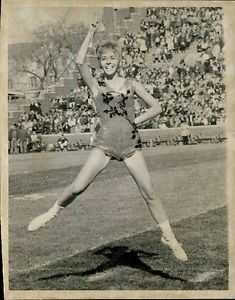
Among the most elegant sections in the band, our twirlers bring a combination of dance, spinning and leadership to every band performance. The twirlers work as a team to bring a choreographed routine to each performance while still actively engaging with the band and acting as ambassadors for the University and the great state of Minnesota.
Color Guard Audition FAQ
Do I have to be a woman to be a Twirler or a member of the Color Guard?
Nope! Both men and women are welcome to audition for either position.
How do I audition to be in the Color Guard?
The audition process consists of two rounds of auditions: video submissions and in person auditions in August. Everyone interested in joining the color guard must submit a video audition no later than June 27. Video auditions should be submitted by posting an “Unlisted” video on YouTube and sending the link to the video with your name, hometown, and years in guard. Instructions for posting and submitting the video, as well as what routines you must perform in the video can be found here, on the Color Guard’s website.
If you would like to perform on rifle at the first half time, you must include both flag work and rifle work in your video audition. There will be more opportunities to audition for rifle at other points during the season. Everyone will be notified no later than July 11 whether they received an invitation to the auditions in August, for which details will be included.
If you would like to perform on rifle at the first half time, you must include both flag work and rifle work in your video audition. There will be more opportunities to audition for rifle at other points during the season. Everyone will be notified no later than July 11 whether they received an invitation to the auditions in August, for which details will be included.
What does being a member of the Color Guard entail?
The Color Guard increases the visual aspect of the Marching Band, representing the music through choreographed spinning and dancing and performs with the marching band at every performance. The Color Guard holds three Wednesday night practices in August before the season begins from 6:00 pm to 8:00 pm. When school starts, we practice with the band every Monday through Thursday 4:15 - 6:00 pm and hold an additional sectional on Wednesdays 7:00-9:00 pm. If it is game week there are two more additional practices, one Friday night and one Saturday morning. Further information on the audiion process can be found on the Color Guard's website.
New uniforms
The University of Minnesota Marching Band needs a significant level of private support to sustain and build its proud tradition of teamwork and service. Currently, the band faces the necessity of replacing its tired and worn, 24-year old uniforms. The goal is to have new marching band uniforms by Fall 2016. Made in the USA, the new uniforms will be rugged, weather-resistant, and flexible, with reversible overlays. The band needs 400 uniforms at a cost of $1,000 per uniform. Every dollar raised beyond the $400,000 goal will go towards the Equipment Fund, which supports the maintenance and purchase of replacement instruments. All gifts are tax-deductible.
To donate, click here.
Just how old are they?

To put into perspective just how old the current uniforms are picture this: A tailor shop sits packed full with hundreds of half-finished, soon-to-be iconic band uniforms. While the head tailor works, he listens to the new hit song by Madonna- Justify My Love. On his way home, he stops by the store to pick up a dozen eggs - a dozen eggs that cost 85 cents. While he waits for his change, he marvels about this new thing called “internet”, which was now made available for commercial use, along with the invention of the first web browser. On his way out of the store, he glances across the street at the movie theatre and sees two new names: Terminator 2 and The Silence of the Lambs. Smiling, he re-adjusts his Minnesota Twins cap, the same type worn by Kirby Puckett, Kent Hrbek and Dan Gladden when they won the franchise’s second world series earlier that year. A kid runs by sporting a Bulls jersey with a new name on the back of it: Michael Jordan, fresh off his second season with his first ring. For those of us who were alive during that year, you may remember it as the grand year of 1991, all those 24 years ago… but if you ask any member of the band, they would probably give you a puzzled look. Why? Because they weren’t yet born.
The fact of the matter is this - there is not a single member of this band who is not marching in a uniform that is older than he or she is. Although that may sound like a uniform rich in history, it is also a uniform rich in sweat and plentiful in wear and tear. Some uniforms are in such poor condition, massive holes gape in all directions.
Our band is widely recognized as one of the very finest in the nation. Together, we can keep it that way. Please consider making a gift to the Marching into the Future campaign. Help us create a permanent resource that will keep the tradition and spirit of the marching band alive and support our magnificent musical ambassadors long into the future.
The fact of the matter is this - there is not a single member of this band who is not marching in a uniform that is older than he or she is. Although that may sound like a uniform rich in history, it is also a uniform rich in sweat and plentiful in wear and tear. Some uniforms are in such poor condition, massive holes gape in all directions.
Our band is widely recognized as one of the very finest in the nation. Together, we can keep it that way. Please consider making a gift to the Marching into the Future campaign. Help us create a permanent resource that will keep the tradition and spirit of the marching band alive and support our magnificent musical ambassadors long into the future.



